Showing posts with label Profession. Show all posts

Aug 12, 2021

Group of Musicians and Nautch Girl - Circa 1860s

Group portrait of two men and three young women. Each of the men is holding a musical instrument, while one of the women is adorned with many pieces of jewelry.
Source: getty.edu

Studio Portrait of a Man as a Bearer, or a Head Servant - Circa 1860s

Studio portrait of a man as a bearer, or a head servant, holding a piece of cloth. He stands next to a desk, while a vanity with a mirror can be seen on the right area of the image.
Source: getty.edu

Mar 27, 2016

Dhuniya, Muslim Cotton Carders with their Instruments - Eastern Bengal 1860's

Dhuniya, Muslim Cotton Carders with their Instruments - Eastern Bengal 1860's

Source: British Library (bl.uk)

Street Trader - Eastern Bengal 1860's

Vintage Photograph of a Street Trader - Eastern Bengal 1860's
Source: British Library (bl.uk)

Mar 26, 2016

Five Sankharis (Shell-Cutters and Bracelet Makers) - Eastern Bengal 1860's

Five Sankharis (Shell-Cutters and Bracelet Makers) - Eastern Bengal 1860's

Sankharis were generally followers of the Hindu gods Vishnu or Krishna and usually vegetarian. The shells used for manufacturing bracelets for Hindu women were imported from the Gulf of Manaar.
This is a trade which is recorded in written records at least as far back as the tenth century.

Source: British Library (bl.uk)

Mar 23, 2016

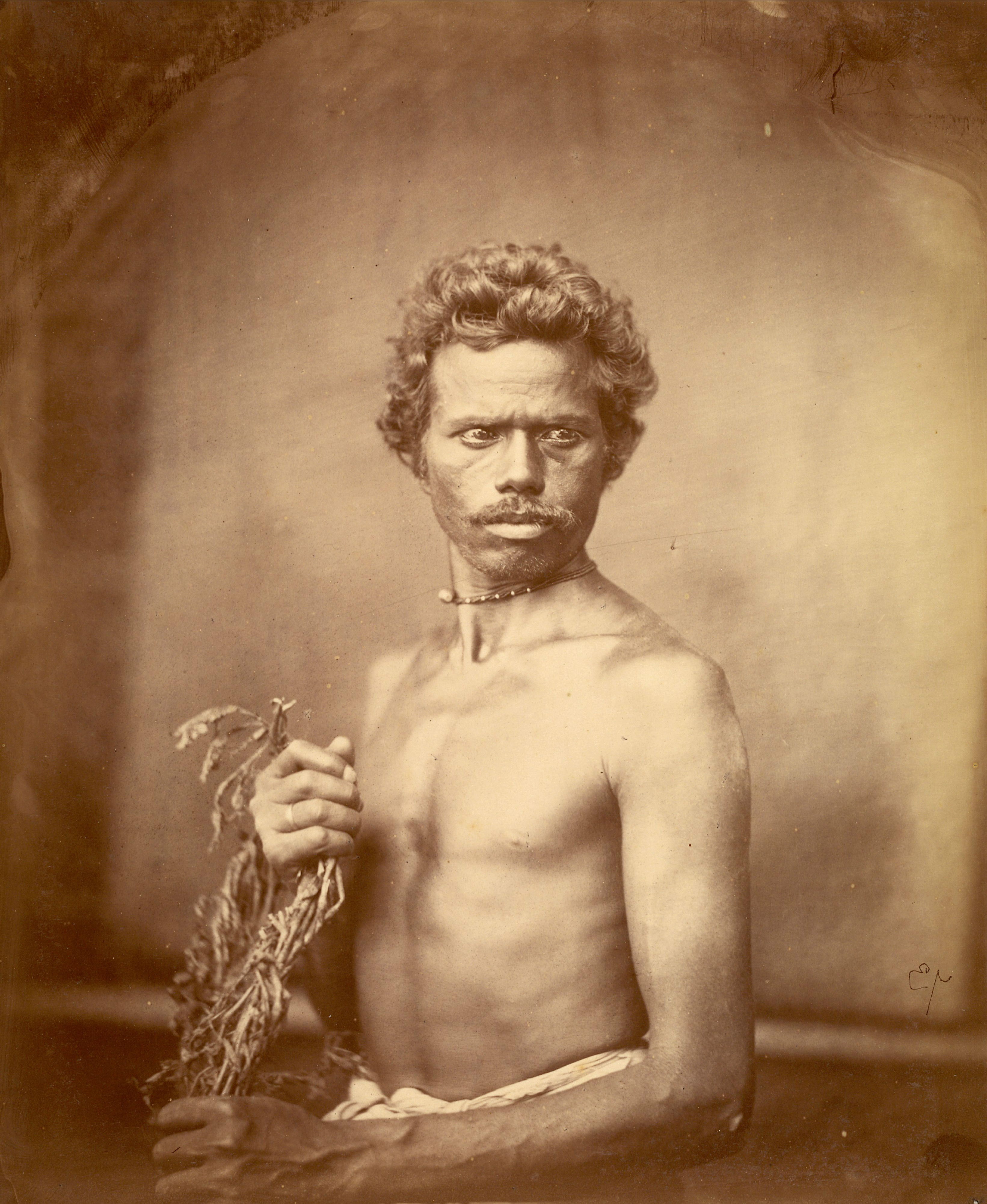
Portrait of a Man from Kaibartha Caste - Eastern Bengal 1860's

Portrait of a Man from Kaibartha Caste -  Eastern Bengal 1860's

The name 'Kaibartha' derives from the Sanskrit words for water ('ka') and livelihood ('varta'). They are a Hindu caste of fisherfolk and cultivators who trace their descent from the mythical fisher girl, Matwyagandha. They were amongst the earliest inhabitants of Bengal. An annual festival known as 'Jal palani' or 'net preserving' is recorded in contemporary records as happening each February. It lasted between two and seven days with 'puja' or prayer held in the Ganges on the last day.

Know more about this caste in Wikipedia

Source: British Library (bl.uk)

Mar 20, 2016

Portrait of a Goala or Member of the Muslim Cowherding Class - Eastern Bengal 1860's

Portrait of a Goala or Member of the Muslim Cowherding Class - Eastern Bengal 1860's
Source: British Library

Group of Men of an Unidentified Caste Posed Among the Piles of Straw - Eastern Bengal c1860

Group of Men of an Unidentified Caste Posed Among the Piles of Straw - Eastern Bengal c1860

Source: British Library

Group of Leatherworkers Posed with the Tools of their Trade - Eastern Bengal c1860

Group of Leatherworkers Posed with the Tools of their Trade - Eastern Bengal c1860

Source: British Library

Group of Three Goldsmiths (Swarnakars) Posed with the Tools of their Trade - Eastern Bengal 1860's

Group of Three Goldsmiths (Swarnakars) Posed with the Tools of their Trade - Eastern Bengal 1860's

Source: British Library

Portrait of Nine Snake Charmers Posed with their Pipes, Baskets and Sacks Containing the Snakes - Eastern Bengal 1860's

Portrait of Nine Snake Charmers Posed with their Pipes, Baskets and Sacks Containing the Snakes - Eastern Bengal 1860's

Bengali snake charmers used a number of species of snake including the most popular 'Jait' or cobra. Upon capture, venemous snakes would have their fangs removed, with the poison bag carefully preserved. This would reach high prices in local markets where Hindu physicians would purchase venom for use in the treatment of disease. Snake charmers would feed their snakes on fish, frogs and mice. Their charges would rarely live for more than six months in captivity. The snakes were used during the Manasa Devi festival, held in July or August, when priests would make them crawl in front of the idol during ceremonies.

Source: British Library (bl.uk)

Mat Weavers - Ceylon (Sri Lanka) c1880

Mat Weavers - Ceylon (Sri Lanka) c1880

Source: 19cphoto.com
Contributor: Anthony Davis (antiqphoto@earthlink.net)

Two Weavers at Work at a Loom in an Open-Sided Mud-Walled House - Eastern Bengal c1860

Two Weavers at Work at a Loom in an Open-Sided Mud-Walled House - Eastern Bengal c1860

Source: British Library

Mar 8, 2016

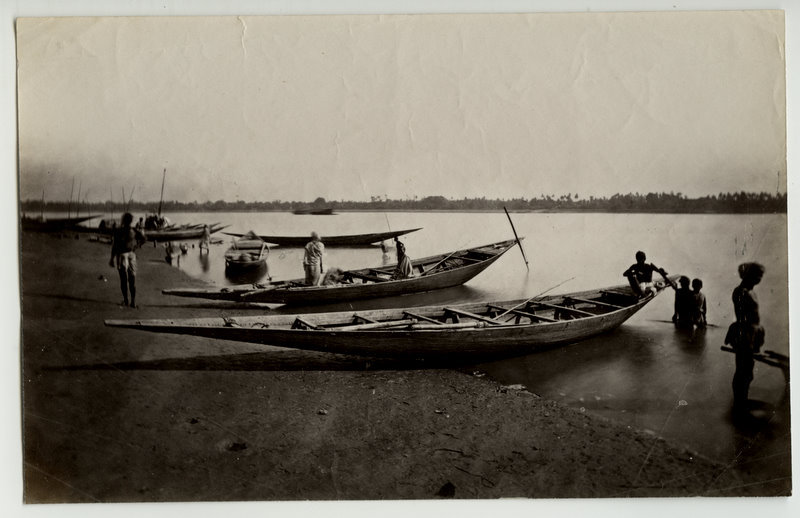
Indian Fishing Boats - c1880's

Indian Fishing Boats - c1880's

Source: ebay

Feb 29, 2016

Snack Seller with a Boy

Snack Seller with a Boy
Source: ebay

Jul 12, 2015

Bhutia Dandy (Carrying Chair) Bearers - c1880's

 Bhutia Dandy (Carrying Chair) Bearers - c1880's

Source:
First Photos: James Kerr (pumpparkphotos.com)
Second Photo: http://sikhim.blogspot.in