Showing posts with label Bengal. Show all posts

Dec 3, 2017

St Paul's Cathedral - Calcutta (Kolkata) 1865

St Paul's Cathedral - Calcutta (Kolkata) 1865
This photograph of St Paul's Cathedral in Calcutta was taken by Oscar Mallitte in 1865 to form part of an album entitled 'Photographs of India and Overland Route'. It shows a view of the cathedral looking across the Birjee Tank (water supply) on the south-east corner of the Maidan. The cathedral was designed in the Indo-Gothic style by William F Forbes. Forbes, a military engineer who was later promoted to Major General, was also responsible for the design of the old Calcutta Mint where he held the post of Mint Master for a time. Construction of the cathedral began in 1839, when the foundation stone was laid by Daniel Wilson, Bishop of Calcutta, and completed in 1847. The tall central spire and square tower beneath were inspired by a similar feature at the twelfth century cathedral in Canterbury, England. The upper portion of the tower, which originally reached a height of sixty-one metres, was destroyed in an earthquake in 1934.

From: British Library

Calcutta (Kolkata) Docks with the Swing-Bridge Gates at the Entrance to the Half-Tide Basin as seen from the River - 1891

Calcutta (Kolkata) Docks with the Swing-Bridge Gates at the Entrance to the Half-Tide Basin as seen from the River - 1891

Calcutta (Kolkata) Docks with the Swing-Bridge Gates at the Entrance to the Half-Tide Basin as seen from the River - 1891
Photograph taken in 1891 by an unknown photographer of the Calcutta Docks with the swing-bridge gates at the entrance to the half-tide basin as seen from the river. The Calcutta Port is the only major riverine port in India and constitutes the Calcutta Dock System. In March 1884, the Secretary of State confirmed the adoption of the Kidderpore site for new docks. The entrance to the dock was to be through a tidal basin about 600 ft by 650 ft, and from the tidal basin to the river were two entrances, one 80 ft wide and the other 60 ft. In 1889-90, the tidal basin had been completed and brought into use, and dock number one was almost finished. The swing-bridges move on a central vertical pivot, allowing shipping to pass in and out of the half-tide basin which remains open for a few hours either side of high-tide.

From: British Library

Various Photographs of Eden Gardens Calcutta (Kolkata) - Mid 19th Century

Pagoda in Eden Gardens Calcutta (Kolkata)

Eden Gardens Calcutta (Kolkata)

Eden Gardens Calcutta (Kolkata)

Eden Gardens Calcutta (Kolkata)

Eden Gardens Calcutta (Kolkata)

Eden Gardens Calcutta (Kolkata)

© Victoria and Albert Museum, London
Photographer: Francis Frith
Date: Between 1850s to 1870s
Whole-plate albumen print from wet collodion glass negative

Nov 22, 2017

Darjeeling Hill Railway under Construction on One of the Loops of the Railway, Probably at Rangtong - 1879

Darjeeling Hill Railway under Construction on One of the Loops of the Railway, Probably at Rangtong - 1879

Photographer:Bourne and Shepherd
Source: British Library

Nov 19, 2017

The Rasmancha Temple, Bishnupur, Bankura District, Bengal - 1860-70's

The Rasmancha Temple, Bishnupur, Bankura District, Bengal - 1869
Photographed in 1869
Photographer: Walter Campbell

The Rasmancha Temple, Bishnupur, Bankura District, Bengal - 1869
Photographed in 1869
Photographer: Walter Campbell

The Rasmancha Temple, Bishnupur, Bankura District, Bengal - 1872
Photographed in 1872
Photographer: Joseph David Beglar

The temples of Bishnupur were built under the Malla rulers of Bengal, fervent adherents of the Vaishnavite movement which flourished in the area from the fifteenth century onwards. The Rasa Mancha temple was built by the ruler Bir Hambir in the early seventeenth century. The temple is not dedicated to a particular deity but every year all the images of the gods are brought there during the Ras festival. Standing on a high plinth, the temple is unique in the sub-continent in its architectural form and style. It has a central square chamber surrounded on all sides by three tiered gallery arcades and roofed with an impressive pyramical structure. No inscriptions survive.

Jun 24, 2017

Oct 1, 2016

Aug 7, 2016

Jul 23, 2016

Calcutta (Kolkata) - The Old Howrah Bridge - 1912

Calcutta (Kolkata) - The Old Howrah Bridge - 1912

Source: ebay

Jun 29, 2016

Porters, North Bengal - c1856

Porters, North Bengal - c1856
Credit: Robert Schlagintweit

May 8, 2016

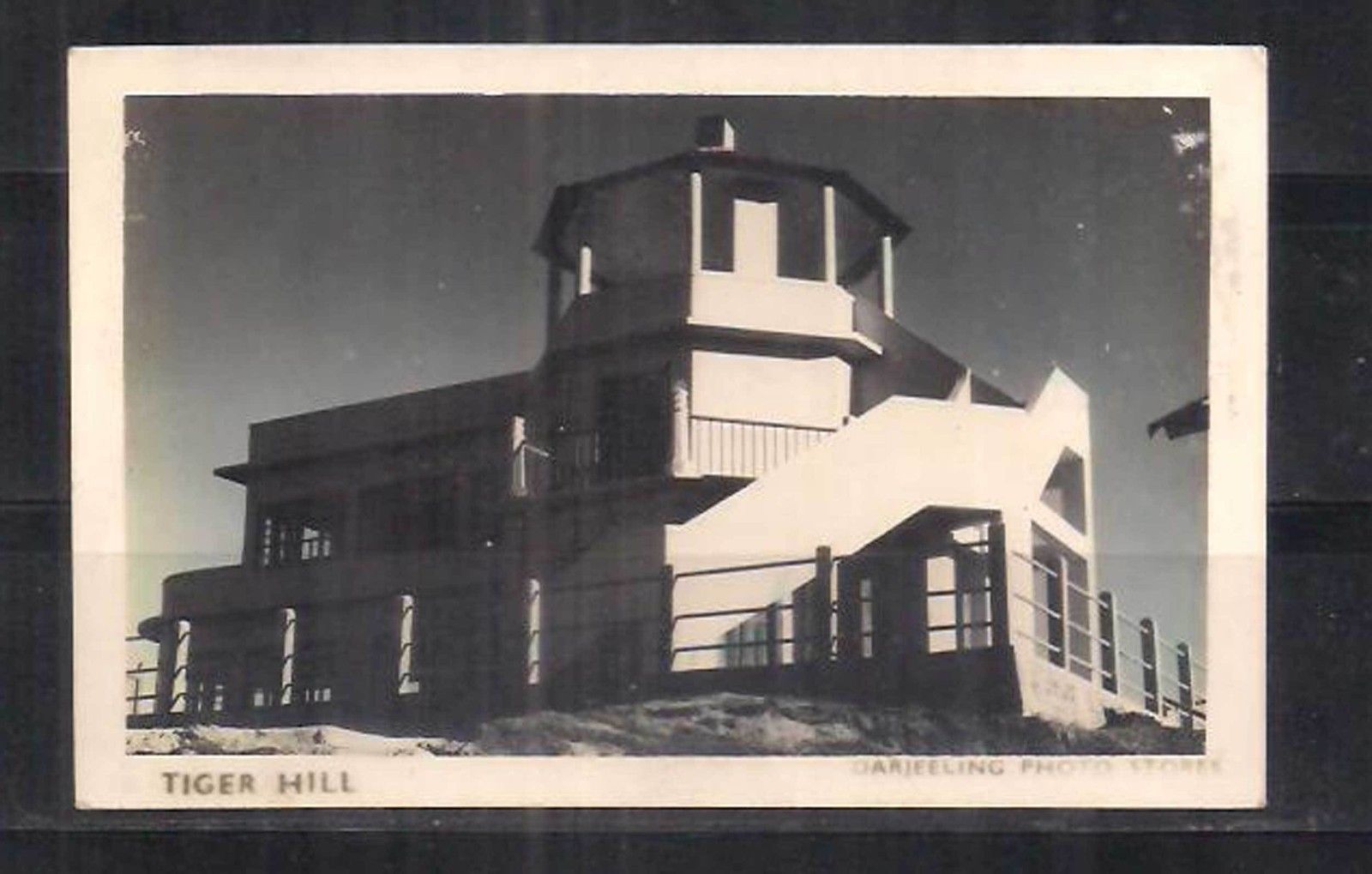
Tiger Hill, Darjeeling, Bengal - Date Unknown


Tiger Hill, Darjeeling, Bengal - Date Unknown
Source: Ebay Seller stamps_postals

Apr 9, 2016

Portrait of a Man of the Kochh Mandai Tribe Holding a Thick-Bladed Agricultural Knife - Eastern Bengal 1860's

Portrait of a Man of the Kochh Mandai Tribe Holding a Thick-Bladed Agricultural Knife - Eastern Bengal 1860's The exact location of this tribe's origin is unknown. At the time of this photograph they inhabited tracts of jungle to the north of Dacca in eastern Bengal or modern Bangladesh.

Source: British Library (bl.uk)

Portrait of Two Women - Eastern Bengal 1860's

Portrait of Two Women - Eastern Bengal 1860's
Source: British Library (bl.uk)

Five Men of Unidentified Ethnic Group from Eastern Bengal - 1860's

Five Men of Unidentified Ethnic Group from Eastern Bengal - 1860's
Source: British Library (bl.uk)

Portrait of a Religious Mendicant (Darwesh / Dervish) from Eastern Bengal - 1860's

Portrait of a Religious Mendicant (Dervish of the Sufi Chishti order) - Eastern Bengal c1860's

This photograph shows a dervish of the Sufi Chishti order. Sufis are devotees of the mystical branch of Islam. In this case the man is a follower of the Indian saint Muin-u'd-din Chishti, whose shrine in Ajmer remains a popular pilgrimage centre today.
Source: British Library

Group of Men probably from Agricultural Castes - Eastern Bengal 1860's

Group of Men of an Unidentified Caste Posed Among the Piles of Straw - Eastern Bengal c1860

Source: British Library