Showing posts with label Delhi. Show all posts

Aug 9, 2021

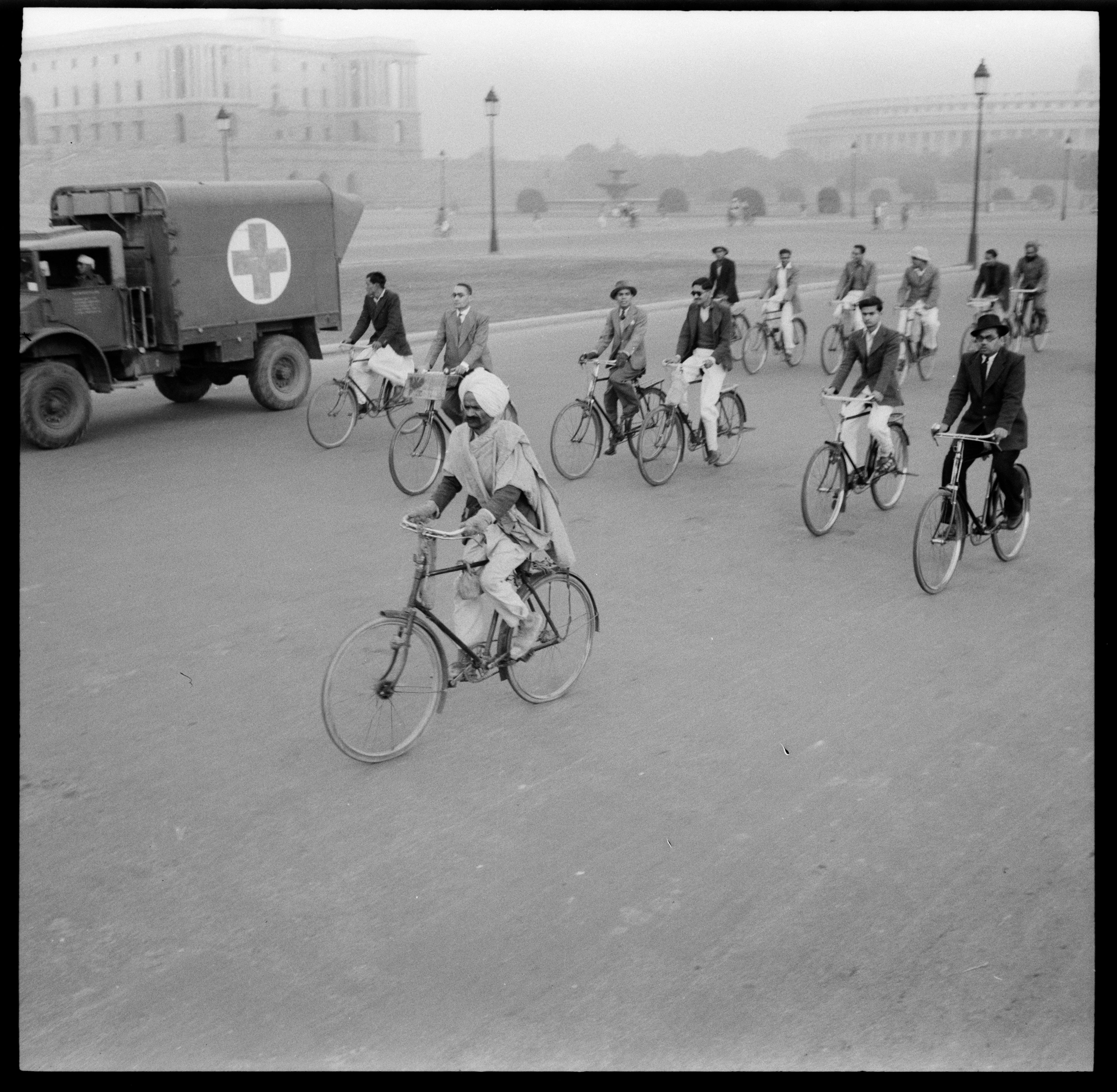
Cycle Riders in Delhi - Circa 1945

Photographer: N. Herfort
Source: https://collection.sl.nsw.gov.au

Dec 3, 2017

The Kashmiri (Cashmere) Gate, Delhi - 1895

The Kashmiri Gate, Delhi - 1895

Photograph of the Kashmir Gate at Delhi, taken by Lala Deen Dayal in the 1890s, from the Curzon Collection: 'Views of places proposed to be visited by Their Excellencies Lord & Lady Curzon during Autumn Tour 1902'. Lord Curzon served as Viceroy of India between 1899 and 1905. The Kashmir Gate is one of the northern gates in the city walls of what is now known as Old Delhi, originally the city of Shahjahanabad built in the 17th century by the Mughal emperor Shan Jahan (r.1628-58). The Kashmir Gate was built in 1835 by Major Robert Smith and was made into a double gateway in 1857 at the time of the Indian Uprising. This gate was blown up when the British retook Delhi during the Indian Uprising of 1857.

Source: British Library

Rao Petarah's Temple, Delhi 1858

Rao Petarah's Temple, Delhi 1858

Photograph of Rao Petarah's Temple, Delhi, taken by Dr. John Murray in 1858. The photograph shows a section from the Quwwat al-Islam mosque, part of the complex in South Delhi that includes the Qutb Minar. The complex was first begun by Qutb-u’d-din Aibak, the first ruler of the Slave Dynasty, and was added to by many subsequent rulers. The Quwwat al-Islam mosque was built in 1192. Inscriptions record that spolia from 27 Jain and Hindu temples that were torn down for its creation. Pillars from the destroyed temples were reused and the Hindu images were plastered over with geometric designs. Over time, the plaster has fallen away revealing the original Hindu carvings. This may explain why the caption refers to the building as a temple instead of a mosque created out of Hindu architectural material.

Source: British Library

Iron Pillar at Qutb Minar Complex, Delhi - 1858


Photograph of Iron Pillar in the Qutb Minar complex in Delhi from 'Murray Collection: Views in Delhi, Cawnpore, Allahabad and Benares' taken by Dr. John Murray in 1858 after the Uprising of 1857. The Qutub Minar complex was initiated by Qutub-ud-din Aibak, the founder of the Slave Dynasty in Delhi (1206-90), to celebrate the onset of Islamic rule in India in 1192. The Iron Pillar, with a height of 7.2 m and diameter of 32 cm, is dated to the Gupta period with Sanskrit inscriptions from the 4th or 5th century. This pillar was taken from a Vishnu temple and placed at this site before the construction of the complex. The Quwwat-ul-Islam mosque, in the background, contained within the complex is one of the earliest extant in India and is a fine example of Islamic architecture employing Islamic principles of accurate construction and geometric ornamentation, but utilising Indian building traditions.

Source: British Library

Jumma or Jama Masjid, Delhi - 1858

Jumma or Jama Masjid, Delhi - 1858

Photograph of Jami Masjid in Delhi from 'Murray Collection: Views in Delhi, Cawnpore, Allahabad and Benares' taken by Dr. John Murray in 1858 after the Uprising of 1857. Jami Masjid, in the background, was constructed by Mughal Emperor Shah Jahan (r. 1627-1666) between 1650-1656 and based on the architectural style of Agra's Jami Masjid (c.1648). "Three bay-wings flanking the central domed chamber of the prayer hall are here preceded by two continuous galleries separated by the transverse block of the central pishtaq (high portal). The front corners of the prayer hall are accentuated by two high minarets crowned in the typical Mughal fashion by domed chhatris (umbrella shaped pavilions)."

Source: British Library

Water Gate of Red Fort, Delhi - 1858

Water Gate of Red Fort, Delhi - 1858

Photograph of Water Gate in Delhi from 'Murray Collection: Views in Delhi, Cawnpore, Allahabad and Benares' taken by Dr. John Murray in 1858 after the Uprising of 1857. The Water Gate, the south eastern gate to the Red Fort or Lal Qila, was constructed by Mughal Emperor Shah Jahan (r. 1627-1658) for his new city Shahjahanabad. The Water Gate was another entrance to the fort.

Source: British Library

Nov 24, 2017

St James's Church - Delhi c1860's

St James's Church - Delhi c1860's

Photographer: Samuel Bourne
Know more in Wikipedia
© Victoria and Albert Museum, London

St. James's Church - Delhi 1860

St. James's Church - Delhi 1860

Source: British Library
Photographer: Eugene Clutterbuck Impey
Know more in Wikipedia

Colonel James Skinner raised the famous cavalry corps in India known as Skinner's Horse. Skinner (1778-1842) was of mixed parentage, born of a Scottish father and Rajput mother. At the age of 16 he was taken under the wing of the French commander of Maharaja Scindia's forces. He went on to acquit himself well in many battles and become one of India's leading mercenaries. St. James's Church in Delhi was founded by Skinner who while lying wounded on the battle field vowed that if he survived he would build a church in thanksgiving. It is the oldest church in Delhi and is built in the shape of a Greek cross, with a dome reminiscent of the Renaissance style. It was designed by Major Robert Smith; building commenced in 1826 and finished ten years later. Skinner himself is buried within the church.

St. James's Church - Delhi 1858

St. James's Church - Delhi 1858

St. James's Church - Delhi 1858

Photographer: Robert and Harriet Tytler
Source: British Library
Know more in Wikipedia

Chandni Chowk or Silver Street, from the Palace - Delhi c.1857-1858

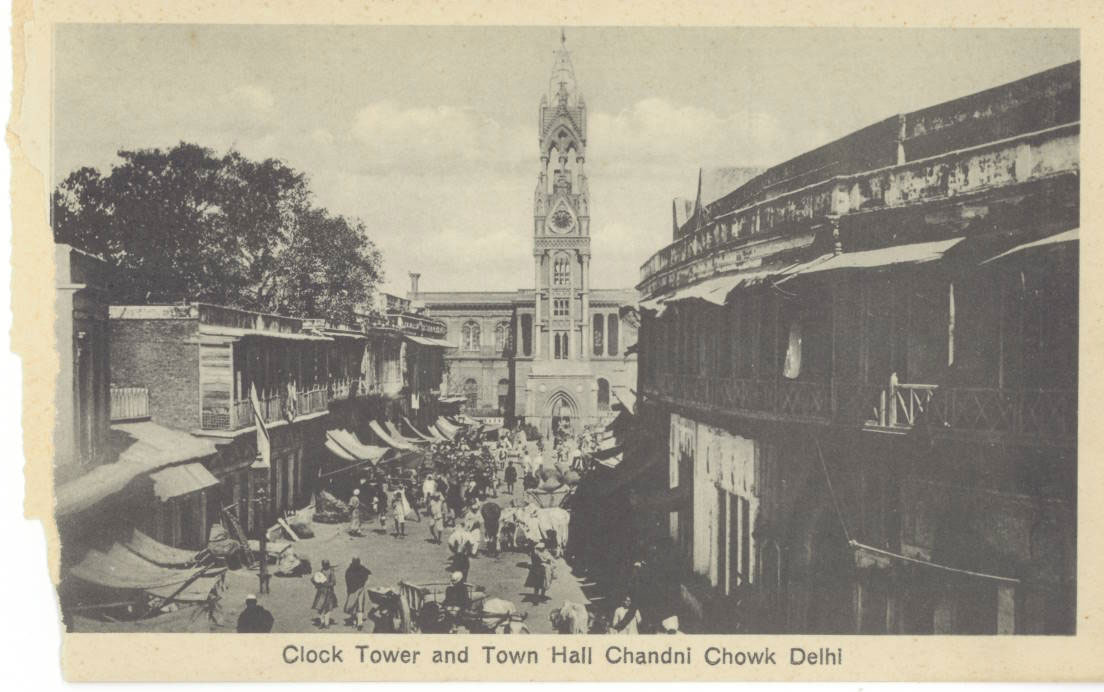
Clock Tower and Town Hall at Chandni Chowk in Delhi

Clock Tower and Town Hall at Chandni Chowk in Delhi

Back of card says "Clock Tower and Town Hall Chandni Chowk the Biggest trade Centre Built at a Cost of Rs 2800/-, after the Meeting."
Lal Chand & Sons, Delhi.  Made in Saxony

Photograph contributed by Mr. Ben Collier (benccollier@hotmail.com) from the Estate of Frances Anna Goheen.  She was born in Mahabaleschwar, India on 30 March 1891 to a missionary family.

St.James's Church in Delhi showing damage caused by the Mutiny fighting

St.James's Church in Delhi showing damage caused by the Mutiny fighting


Photograph of St. James's Church in Delhi from 'Murray Collection: Views in Delhi, Cawnpore, Allahabad and Benares' taken by Dr. John Murray in 1858 after the Uprising of 1857. St James Church was commissioned by Colonel Skinner (1778-1841), a distinguished military officer, famous for the cavalry regiment Skinner’s Horse, known as the Yellow Boys because of the colour of their uniform. While lying wounded on the field of battle he made a vow that if he survived he would build a church in thanks for his life being saved. The church was started in 1826 and completed ten years later. During the Uprising of 1857 the Chruch was damaged by shellfire. The dome of the chruch is topped by a copper ball and cross, which was used by sepoys in 1857 for target practice.

Source: British Library

Chandni Chowk, the Main Street in Delhi - c1860's

Chandni Chowk, the Main Street in Delhi - c1860's

Know more in Wikipedia
© Victoria and Albert Museum, London

Nov 18, 2017

Streets of Old Delhi - 1954

The following pictures were made by Rodney Stich in 1954 in Old Delhi, India, while the plane was being loaded with 1600 monkeys to be flown to the United States for the Salk polio vaccine program.

Streets of Old Delhi - 1954

Streets of Old Delhi - 1954

Streets of Old Delhi - 1954

Streets of Old Delhi - 1954 Source

Nov 17, 2017

Portrait of Delhi man, 1878

Portrait of Delhi man, 1878

Sep 6, 2017

May 16, 2017

Delhi Gate of Red Fort - Delhi 1895, Photographed by Lala Deen Dayal

Delhi Gate of Red Fort - Delhi 1895, Photographed by Lala Deen Dayal

Photograph of the Delhi Gate at the Red Fort in Delhi from the Curzon Collection, taken by Lala Deen Dayal in the 1890s, from the Curzon Collection: 'Views of places proposed to be visited by Their Excellencies Lord & Lady Curzon during Autumn Tour 1902'. The Delhi gate is one of two main entrances to the Lal Qila or Red Fort, the palace citadel built in the 1640s by the Mughal emperor Shah Jahan (r.1627-1658) as the headquarters of his new capital, Shahjahanabad. The palace apartments are contained within a fortification wall built of red sandstone, surrounded on three sides by a moat and on the fourth by the river Yamuna. This is a general view of the gate from outside the fort, showing the bastions, battlements, chhatris and turrets which crown the walls.

Source: British Library

May 12, 2017

Motee Musjid (Pearl Mosque) - Red Fort, Delhi, Circa 1866

Motee Musjid (Pearl Mosque) - Red Fort, Delhi, Circa 1866

The mosque was built by the Mughal emperor Aurangzeb at the Red Fort complex in Delhi, India, from 1659-1660 for his personal use. The mosque was also used by the ladies of the Zenana. The mosque was constructed at a cost of Rs. 160,000.

Know more in Wikipedia

Source: getty.edu 

Oct 1, 2016

Studio portrait of a Mogul Father with his Children at Delhi, taken by Shepherd and Robertson - c1860's

Studio portrait of a Mogul Father with his Children at Delhi, taken by Shepherd and Robertson - c1860's

Studio portrait of a Mogul Father with his Children at Delhi, taken by Shepherd and Robertson - c1860's

Source: British Library and http://photography.si.edu 

Aug 22, 2016

Professor [James] Ricalton and two of his Cashmere friends at the Durbar, Delhi, India - 1903

Professor [James] Ricalton and two of his Cashmere friends at the Durbar, Delhi, India - 1903

Source: Library of Congress (loc.gov)