


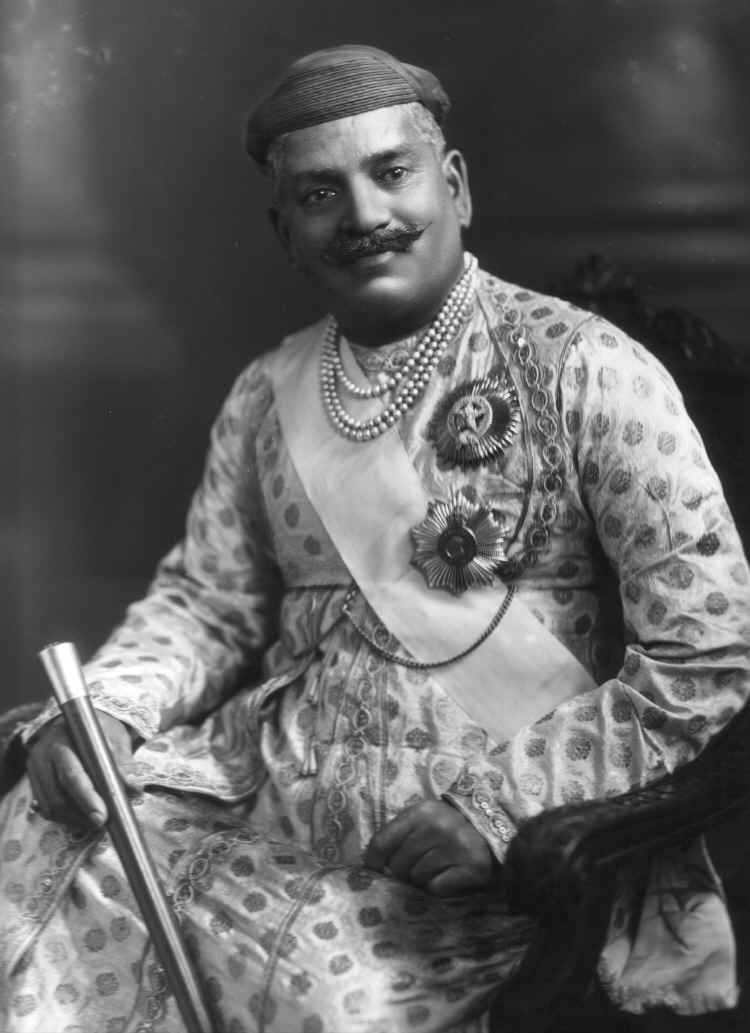
 Maharaja Sayajirao Gaekwad III of Baroda
Showing posts with label Baroda. Show all posts
Showing posts with label Baroda. Show all posts
Nov 17, 2017


Nov 14, 2017
A State procession in Baroda (Vadodara), Gujarat - Circa 1880

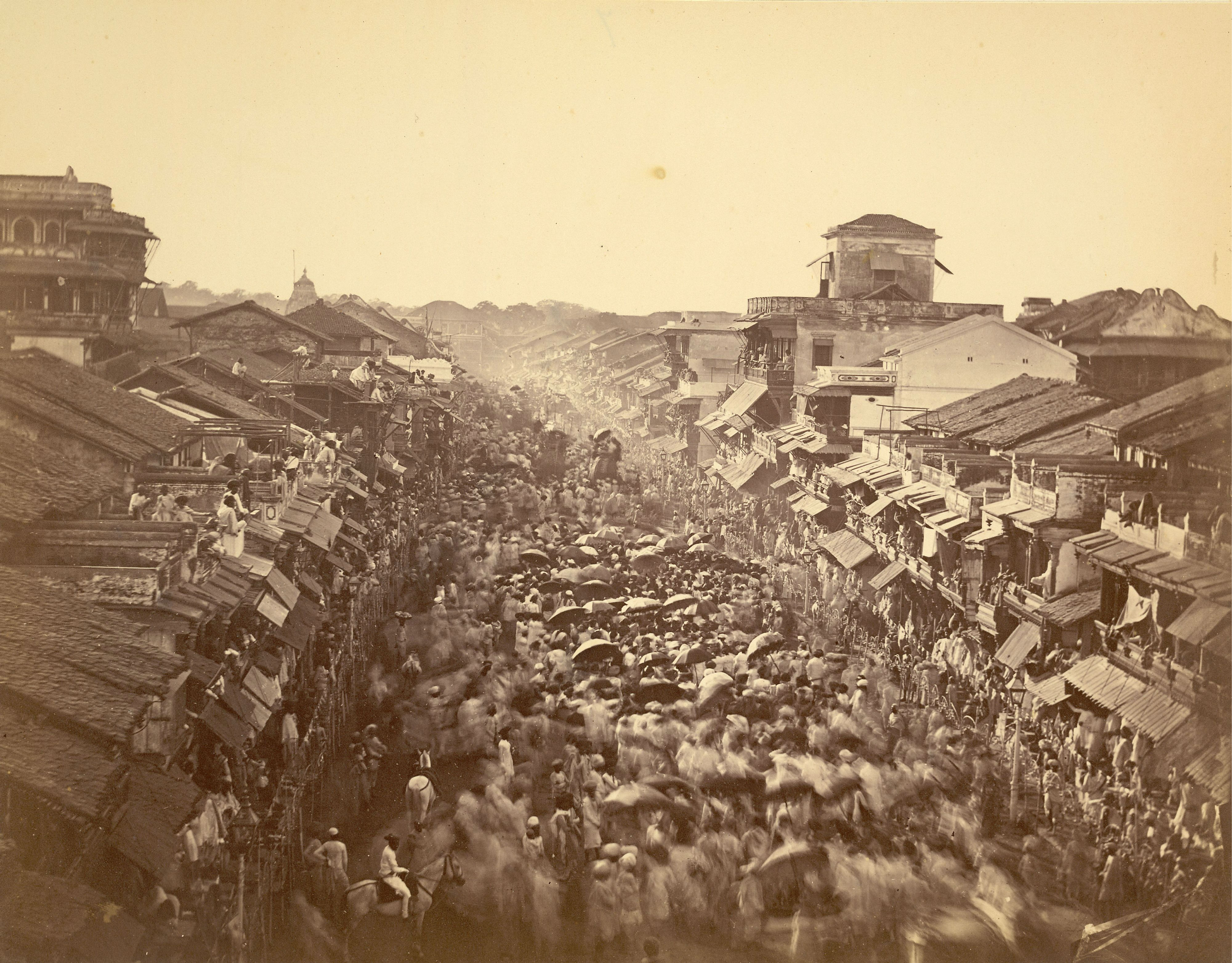
Photograph of a State procession in Baroda (Vadodara) from an 'Album of portraits and views in Baroda' taken by an unknown photographer in c. 1880. Vadodara, on the banks of the river Vishwamitri, was capital of the princely state of Baroda from 1734 till 1947 under the Gaekwads who transformed the city into a progressive centre of education, culture and industry. In 1802 a treaty was concluded between the Gaekwar and East India Company by which a British Resident was appointed to the court and a provision was made for the maintenance of a British military force in the state. After Indian independence the city became a part of the Bombay state and in 1960 of the state of Gujarat. This is a view looking down a street during a State procession in Baroda (Vadodara).
Source: British Library
Jun 24, 2017

Jul 4, 2016
State procession in Baroda (Second View) - 1880
Photograph of a State procession in Baroda (Vadodara) from an 'Album of portraits and views in Baroda' taken by an unknown photographer in c. 1880.
Jun 7, 2016
Dec 14, 2015
Hunting Cheetas at Baroda - 1895

Photograph of a group of three cheetahs with handlers at Baroda, Gujarat from the Curzon Collection, taken by an unknown photographer during the 1890s. Hunting with cheetahs was one of several royal sports traditionally favoured by Indian princes and continued during the 19th century. These animals belonged to the Gaekwar Sayaji Rao III (ruled 1875-1939), 12th Maharaja of Baroda.
Elephant with a golden ambari (howdah) at Baroda - 1895

Photograph of an elephant with a golden ambari at Baroda, Gujarat from the Curzon Collection, taken by an unknown photographer during the 1890s. The elephant was one of about 55 state elephants owned by the Gaekwar Sayaji Rao III (ruled 1875-1939), 12th Maharaja of Baroda. They were used in ceremonial processions and were granted to high officials as a mark of royal favour. In this side view, the elephant is caparisoned in cloth of gold and bears on its back the ambari, a throne or state howdah made of gold which only the largest and strongest elephants could support.
Elephant with golden howdah, Baroda - 1890

Photograph of an elephant with a golden ambari at Baroda in Gujarat, from the Lee-Warner Collection: 'Baroda views and buildings, c.1890' taken by an unknown photographer. The elephant was one of about 55 state elephants owned by the Gaekwar Sayaji Rao III (r.1875-1939), 12th Maharaja of Baroda. They were used in ceremonial processions and were granted to high officials as a mark of royal favour. In this side view, the elephant is shown caparisoned in cloth of gold and bears on its back the ambari, a throne or state howdah made of gold which only the largest and strongest elephants could support.

Dec 14, 2014

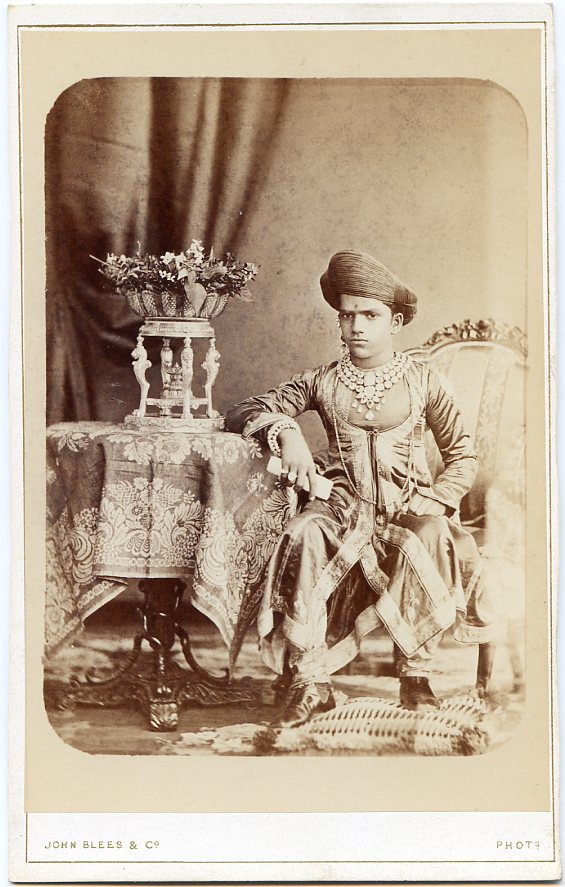


Maharajah Sayaji Rao Gaekwar of Baroda - 1875

Photograph by Bourne and Shepherd
The Full-length portrait of Sir Sayaji Rao, the young Gaekwar of Baroda (Vadodara) is taken a few months after his accession to the throne of Baroda on 27 May, 1875. The state of Vadodara in Gujarat, western India was ruled by the Gaekwads from 1734 to 1947. The rule of Sayaji Rao (r.1875-1939) was characterised by unprecedented progress and reform. He initiated a number of social reforms and paid great attention to the economic development of the state. He founded modern textile and tile factories and it is largely due to his policies that Vadodara is today one of the most important centres for the textile, chemical and oil industries in India. In order to develop education he introduced compulsory primary schooling, a library system for adult education and founded the Maharaja Sayajirao University of Vadodara.
The Gaekwar of Baroda Sir Sayaji Rao - 1880

Photograph of Sir Sayaji Rao, Gaekwar of Baroda (Vadodara) from the 'Album of portraits and views in Baroda' taken by an unknown photographer in c.1880.
Source: British Library
Jul 9, 2010
New and old Palaces at Makarpura, back view - Baroda 1895
 Photograph of the old and new palaces at Makarpura, near Baroda, Gujarat from the Curzon Collection, taken by an unknown photographer during the 1890s.
Silver Zenana carriage ( Second View ) - Baroda 1895
 Photograph of a silver carriage at Baroda, Gujarat from the Curzon Collection, taken by an unknown photographer during the 1890s. The solid silver two-wheeled carriage is drawn by white bullocks and belonged to Gaekwar Sayaji Rao III (ruled 1875-1939), 12th Maharaja of Baroda. He owned a collection of exotic transport, which also included golden carriages and a miniature carriage drawn by deer. They were displayed to visitors and used on ceremonial occasions. It seems unlikely that this is a zenana carriage, which would have been enclosed to ensure the seclusion of female members of the royal household when travelling.
Chimnabai Nyaya Mandir, SE view - Baroda 1895
 Photograph of the Chimnabai Nyaya Mandir or High Court at Baroda, Gujarat, taken by an unknown photographer during the 1890s.
Subscribe to:
Posts (Atom)