


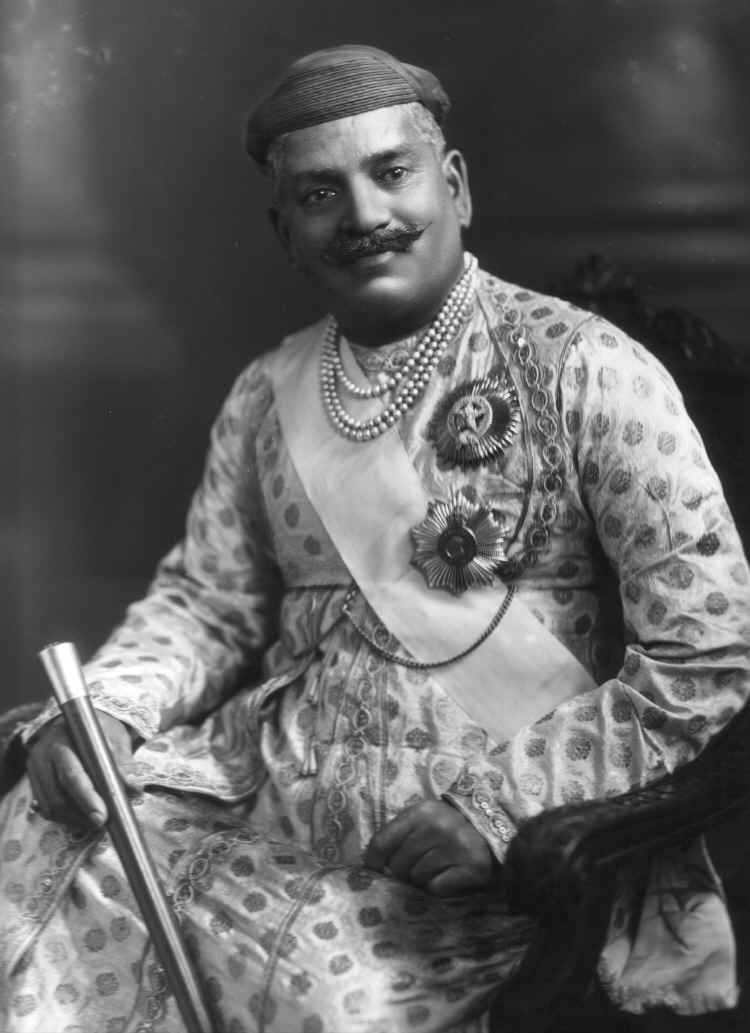
 Maharaja Sayajirao Gaekwad III of Baroda
Showing posts with label Gujarat. Show all posts
Showing posts with label Gujarat. Show all posts
Nov 17, 2017

Muharram Festival Procession - Baroda, Gujarat, Circa 1880

 Photo of a Muharram procession in Baroda (Vadodara) from the 'Album of portraits and views in Baroda' taken by an unknown photographer in c. 1880.


Nov 14, 2017
A State procession in Baroda (Vadodara), Gujarat - Circa 1880

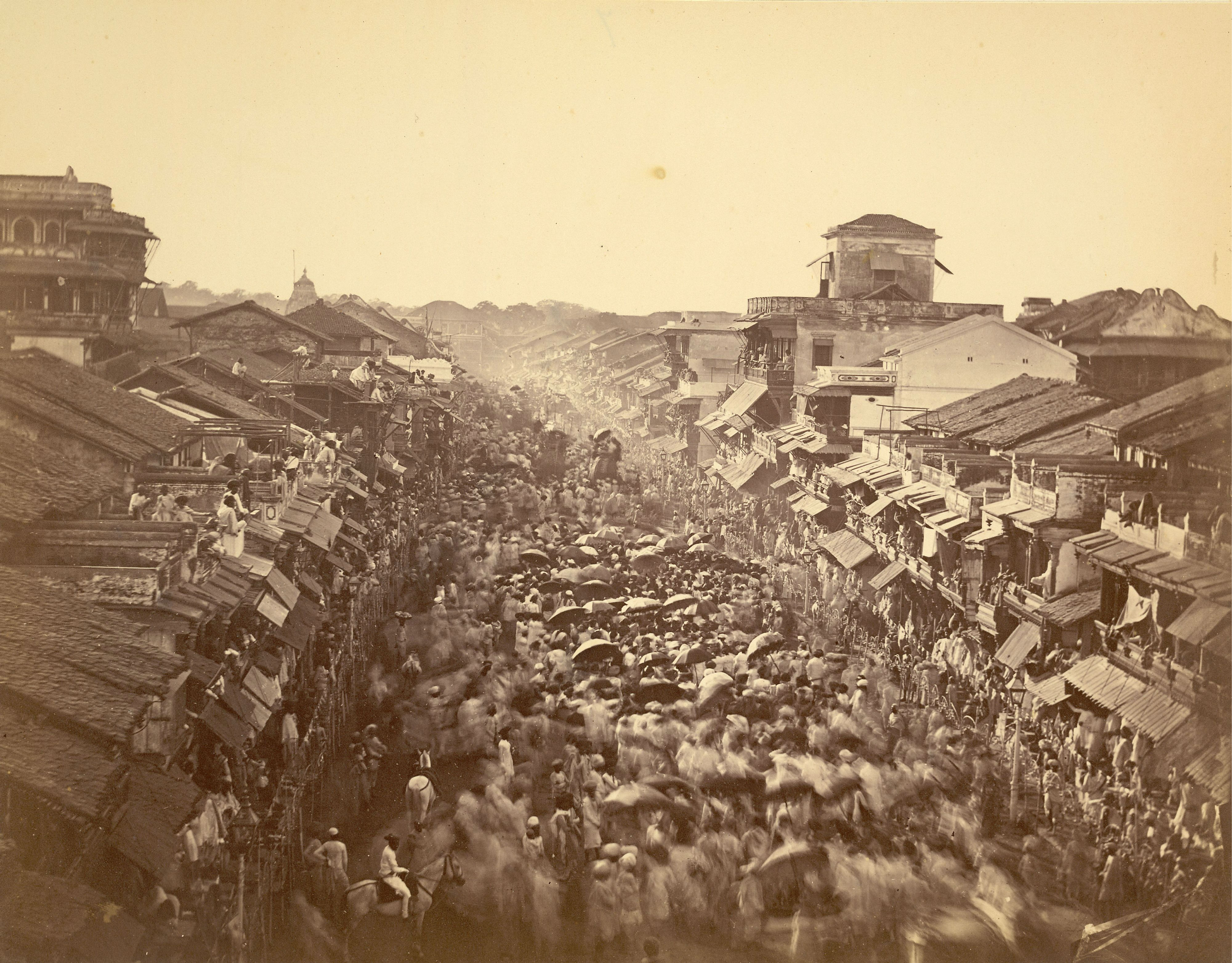
Photograph of a State procession in Baroda (Vadodara) from an 'Album of portraits and views in Baroda' taken by an unknown photographer in c. 1880. Vadodara, on the banks of the river Vishwamitri, was capital of the princely state of Baroda from 1734 till 1947 under the Gaekwads who transformed the city into a progressive centre of education, culture and industry. In 1802 a treaty was concluded between the Gaekwar and East India Company by which a British Resident was appointed to the court and a provision was made for the maintenance of a British military force in the state. After Indian independence the city became a part of the Bombay state and in 1960 of the state of Gujarat. This is a view looking down a street during a State procession in Baroda (Vadodara).
Source: British Library
Aug 22, 2016
Sacred bullocks before state carriage - Baroda

Date: Probably from early 20th Century
Source: Library of Congress (loc.gov)
Aug 14, 2016
View of Porbandar from Sea, Gujarat - c1950-60's

Photographer: Wim Swaan
Source: The J. Paul Getty Museum
Aug 6, 2016
Group of Jain Temples at Palitana on top of the Satrunjaya Mountain Gujarat - 1949

Source: http://photodivision.gov.in
Jul 4, 2016
State procession in Baroda (Second View) - 1880
Photograph of a State procession in Baroda (Vadodara) from an 'Album of portraits and views in Baroda' taken by an unknown photographer in c. 1880.
Jun 7, 2016
May 8, 2016

Feb 24, 2016

Feb 13, 2016

Dec 14, 2015
Hunting Cheetas at Baroda - 1895

Photograph of a group of three cheetahs with handlers at Baroda, Gujarat from the Curzon Collection, taken by an unknown photographer during the 1890s. Hunting with cheetahs was one of several royal sports traditionally favoured by Indian princes and continued during the 19th century. These animals belonged to the Gaekwar Sayaji Rao III (ruled 1875-1939), 12th Maharaja of Baroda.
Elephant with a golden ambari (howdah) at Baroda - 1895

Photograph of an elephant with a golden ambari at Baroda, Gujarat from the Curzon Collection, taken by an unknown photographer during the 1890s. The elephant was one of about 55 state elephants owned by the Gaekwar Sayaji Rao III (ruled 1875-1939), 12th Maharaja of Baroda. They were used in ceremonial processions and were granted to high officials as a mark of royal favour. In this side view, the elephant is caparisoned in cloth of gold and bears on its back the ambari, a throne or state howdah made of gold which only the largest and strongest elephants could support.
Elephant with golden howdah, Baroda - 1890

Photograph of an elephant with a golden ambari at Baroda in Gujarat, from the Lee-Warner Collection: 'Baroda views and buildings, c.1890' taken by an unknown photographer. The elephant was one of about 55 state elephants owned by the Gaekwar Sayaji Rao III (r.1875-1939), 12th Maharaja of Baroda. They were used in ceremonial processions and were granted to high officials as a mark of royal favour. In this side view, the elephant is shown caparisoned in cloth of gold and bears on its back the ambari, a throne or state howdah made of gold which only the largest and strongest elephants could support.
Sep 15, 2015

Jul 12, 2015
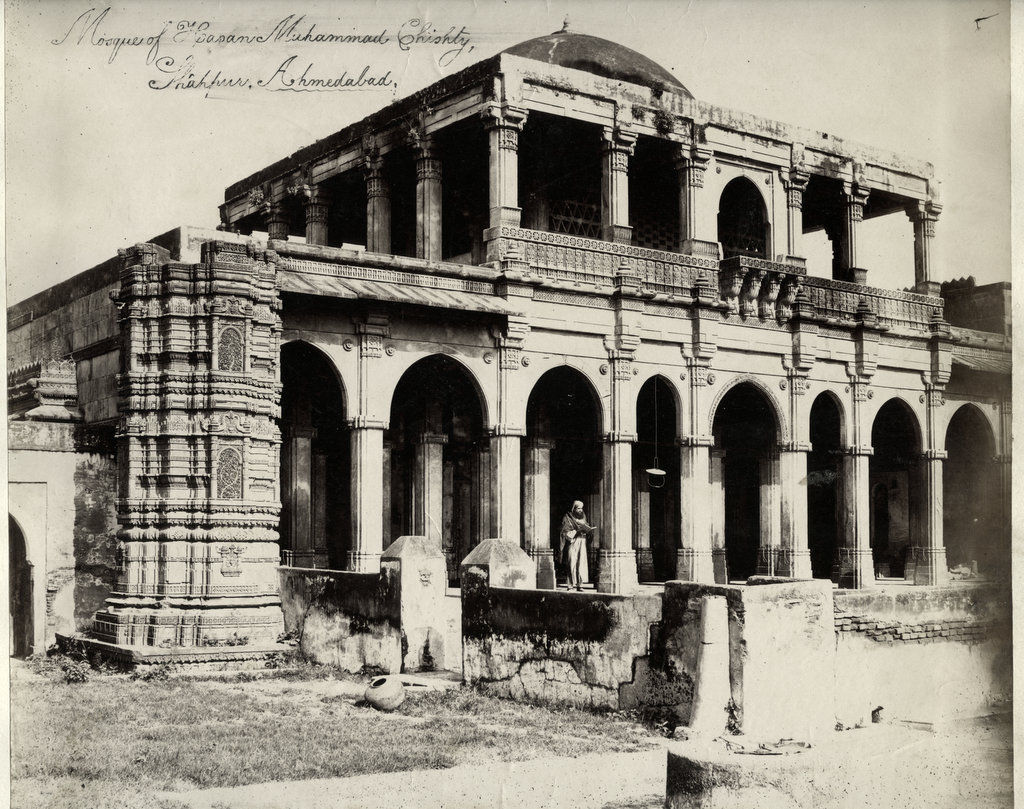
Shaikh Hasan Muhammad Chishti's Tomb (Shahpur Mosque), Shahapur, Ahmadabad, Gujarat - 1860's
Credit: James Kerr (pumpparkphotos.com)
Shaikh Hasan Muhammad Chishti's Tomb (Shahpur Mosque), Shahapur, Ahmadabad, Gujarat - 1885

Photograph of Shaikh Hasan Muhammad Chishti's Mosque at Shahapur in Ahmadabad in Gujarat, taken by Henry Cousens in the 1880s, from the Archaeological Survey of India. This mosque was built in 1565 in the Shahapur district, close to Shahapur Gate and the river. The pillars of the facade support nine cusped arches. Over the central five arches is a second storey, supporting a dome. The minarets, with their exuberant carving, particularly that in the niches, are among the most elaborate in Gujarat.
Know more about this architecture in Wikipedia
Source: British Library
Subscribe to:
Posts (Atom)